Thursday, August 1, 2024

collaborative processes part 2

Given my background, i approach writing and designing and publishing and working with authors, where possible, in as collaborative a way as possible, there have been some inside the Castle books designed in house that are simply a close transcription to the authors intention as possible, perhaps they had a distinct vision but needed our skills for technical realization, and then there are other books that are much more about a therapeutic prying forth of latent paratextual attributes that the author perhaps was unconscious of, this usually involves asking some very simple questions about the proportions of the book (aspect ratio), typeface references or goals, page detailing (numbers, running titles, situating textblock on page, etc), and of course cover vibe... 

These questions typically lead down allusory pathways or have to do with how these mechanisms can inflect the presentation of the text, a recent example is Joanna Walsh's AUTOBIOLOGY, the book is squat in proportion although not square with the textblock conventional if not slightly narrow in proportion, sitting in a wider than normal page this textblock takes on a sense of verticality that promotes a sense of downward momentum meant to echo or celebrate the relentlessly scrolling nature of the digitally generated text, something i am struggling with right now is the swiping nature of tiktok for McManus's book culled from audio transcriptions of tiktok. What does swiping look like in a book. Superficially or seems like the book form its already a swipe left kinda form, so how do you use the form of the book to make the reader conscious of the fact that the book is the precursor to the digital experiences they now take for granted. 

These are questions. But even in the most design centric books, like Grant's giant full color beast, there are agreed upon terms. In any collaborative environment the terms seem crucial. In the experimental architectural practice I had for a decade + our agreement was a methodology of "obstructive collaboration." It involved a lot of tennis-like blind back and forth with the idea that the thing you get back is aggressively affecting your contribution. It resulted in very odd stuff like this SRO hotel that was built on the site of the Pantheon in Rome. 
The ITC 2: REVENGE OF THE CASTLE FREAK is a collaboration of its own sort that I'm working on now. It's interesting because there was a set of parameters that Kyle Booten built for the generation of the text, both by authors and by AI, but the actual editing approach I'm taking is a completely distinct thing that looks at all the content of the authors and trying to find something to do with it. It feels like Burroughs cut-up meets Phil Spector putting together Let It Be... (2 murderers?)

I have worked with people in the past, whether it's through literature or architecture that simply didn't understand collaboration in even the most elementary sense. It isn't even about ego, because some of the most egotistical musicians to ever walk the earth can still jam with someone. I think it is a strange limbo between talent and ego, where neither are in control, a middling defensiveness that is prone to shutting off the outside world as if art its something pure, like a fully armored Athena busting into the world like the Koolaid man. I prefer a mess.

Monday, March 6, 2023

THE LAST TRAIN by Ryan Madej

There is something incredibly familiar about THE LAST TRAIN by Ryan Madej... not that it is derivative, it is not, it's very distinctive, more a familiarity to the world that it inhabits or perhaps the world that it constructs, because although it's a novel, fiction, and there is certainly a narrative unfolding or undulating, it seems far more content in allowing the narrative to be a mechanism for gazing at the world, like the narrative is a means of perception, like those illfated google glass things, the narrative is almost a walking tour, but not in the manner of something exhaustive like Butor's DESCRIPTION OF SAN MARCO, trying to specify or delineate, because Madej's perception is fragmentary, fragmented by what i could only call academic references (of his world, not ours (think Borges)), yet rather than feeling fragmentary these provide a sense of connective tissue, imagine you're walking along reading an encyclopedia and glancing up and down at the city and people around you, the information, or the way Madej articulates and situates the information makes it objectlike, this is the character of the prose, deceptively tale-like, but read with crossed eyes, what does he do with this, well that is where another stratum of familiarity is deposited, this physical world is very familiar to our own, this might sound derp, but it is familiar, not identical, there is a strange parallelness to it that i started to attribute to the frame of reference of the book, much in the way a vagrant might perceive the exact same city we are perceiving in a very different way, their immediate needs are different, the way they use and feel connected to the city are different, their landmarks are different, they coexist with ours yet they are in some way skew, Madej allows those skew landmarks and details to arise our come into focus over an otherwise blurry vista of a familiar North American city, and with this sense of skewness, this mechanism of distorted or selective perception, is deposited the final stratum of familiarity, in an era where literature is valued for its sincerity and fidelity, where the unfiltered experience and reflection of the author is the prize we seek, Madej is scratching the itch of mythologizing (think of the overlay of ULYSSES on Joyce's own life armature), dare I say, fictionalizing, what seems very possibly to be a series or convolution of his own experience (or very likely not, i dunno but that's how i enjoyed reading it) used as an armature to tell a more vast and dilating tale, to depict a more lucid environment, and to amplify or caricature readerly emotions and perceptions, because in the end, a book should be about a reader's experience yes? not just a platform to concretize a human presence distinct from the reader. 


buy THE LAST TRAIN here: https://www.lulu.com/shop/ryan-madej/the-last-train/paperback/product-nrg45w.html?page=1&pageSize=4

Wednesday, February 22, 2023

language lust pt 2

2 points make the prose of slam crucial to my contemporary language lust, (2) diction and (1) whatever rhetorical terms mean leaving words out or having clumsy grammar, i should say i never really read the lyrics, maybe i should, just the song titles mostly, and perhaps the compactness of a title, and sequence of titles, it lends a spare compactness that the lyrics do not because even in the shaky command of English the lyrics still frequently use articles and are not as charming, there is something so strong about a text fragment just being a string of nouns, shane Christmass talking to Bielecki saying he went back through a manuscript deleting adjectives (i think)... something akin to that sort of frustrating read, something about that stripping although unintentionally in the esl of the greatest slam lyricists, is a way of taking away the communicative intent of language and placing it in a pure visual concentrate shot straight into the part of your brain that doesn't care what things mean, 

My dear poetry teacher in grad school (oh to be the only literature professor in a freestanding architecture school) aino paasonen gently urged us to use specificity as thickening agent, i recall only an example, very simple, instead of "tree" say "Jacaranda"... of course my excessive lust for text potential turns that into a fascination with jargon, carcass was derided (by morons) for lyrics that were essentially copied out of medical textbooks, were they trying to make sense? did they know what they were saying? Doubtful doubtful, could you tell what they were saying lol of course not... what mattered was the juxtaposition of this insane indecipherable text with the music, gesamskunstwerk of atomization, each freestanding piece is resonating, so with the carcass stage set, we have all sorts of wild improvising on that model, my (not so secret) favorite of which is Drain of Impurity (see part 1 https://incastellated.blogspot.com/2022/11/language-lust-pt-1.html?m=1), the science fiction element added to the grotesque takes the diction way beyond the human, and batu's esl (he's Turkish) twists it just that sweet bit further by gloriously smashing subject/verb agreement & improvising on parts of speech, each song title is almost like a simple noun (made of 6 or 7 words) like a chunk, irreducible, meant to be gazed upon like a metaphor for language itself, like a stone of words, crushing your skull

Saturday, February 18, 2023

he is in his own hell

I am not a trained writer.  I've never read a craft book. I've read theories on the potential of literature (not of writing), perhaps to my lifelong detriment.

One of the oulipo cats, Benabou? Queneau? Actually the mathematician guy... said something along the lines of,  in advocating for constrained writing, working within an established set of rules is better than being subject to a received set of rules you're unaware of, and as a writer to a certain extent i understand this, establishing a framework for the manner in which language will be performed, almost like the key of a musical piece, less like a sonata (or whatever a constrained musical form is, i have no clue), not prescriptive as much as chromatic, yes that seems crucial as long as it is in service of the project and not some unseen arbitrary ideal, perhaps the language should be performed like noise, the project is one of grating monotonous high intensity, perhaps it should be performed like a Richter squeegee painting, what are the language analogs to these, how can one be allusive without namechecking, how do you employ or misuse grammar in a rhetorical manner to foster that analog, what is the appropriate diction for that goal, so frequently language is seen as in service of something else, the something the writer is trying to tell (which makes show don't tell all the more hilarious to me) and the language is formed toward that goal under the mutated aegis of some hemingway handmedown notions of craft, sure there is a throttle in there, rachet up the tension, spareness, obliqueness, but never too much, although craft is presented (in the craft racket) as being a sort of constraint (since when is subjective standards of beauty a practical constraint), it it's in fact more the set of rules that you truly have no awareness of. If craft was solved how would the charlatans keep writing new craft how to books. No. It is far more valuable for a thoughtful writer to show through their specific use of language, because writing it's some thing you look at, to develop congruence of the langauage form with the specific piece, and reject some arbitrary standard for success. 

Getting people to read it... now that's a different problem. 

Monday, December 12, 2022

6 years of MASSIVE by John Trefry


Strands of long motion obscurity of smoke in the one point vortex of a continuous dash dash lane center and double solid roadway center, a white figure in the black rapidly in the consumption of smoke and in the smoke is asphalt fragmentation the largest chunks of which are near the vertex smaller in a rain ballistic arc over the entirety in absolute brown and gray with no potato flesh daylight remaining, the perspectival vortex black in the impactcrater of thin flakings of tabular layers radiating in graduation from brown to gray to black and all to black, the potatoflesh sky a gently transitional canopy umbrage in dilation smokewash crenellations of imperfections within the strands of a color softly with desaturation of the strands nearly green but at the curb itself white lined is the peeling up of the asphalt triangle and the urgence of earth and smoke both white and fire orangeness in a fringe about the fragmentation a fringe of blond hair around the surging of the black fragmentation coalescence, an upright of a milemarker dash space dash space reflector dash at the vertex of an uplifting triangle of asphalt dash at angle above the horizontal swallowing sallow smoke colors outside the strands the strands constructing string loops of color crossgrain from the motion a color impactcrater of refraction, a lone tree taller than the canopy diminishment an oblong asphalt island before the sky, tree trunks parallax the flesh of sky milk of luminous canopy inversion in the reflection of gentle bobbing blue car hood slightly turningly away from the fragmentation of all occlusion into which the diminishment of a hedge just at the horizon line is swallowing a lamp post, tendrils conical dissipating in arcs over the hedge handcurl of fire tawny gush of earth cloud nominally mossgreen the skymilk figure lowhanging fray in advancing fringe, brown fragmentation all, obscurant brownwash, blackwash skylit roadway all,


Monday, November 21, 2022

collaborative processes pt 1

Forgive me but my road to collaboration in publishing was for the most part formed in my education and practice of architecture, i consider myself really fortunate to have been in architecture school in the 90s, a much headier time still rife with Eisenman's bastardized deconstruction, Lebbeus Woods' drawing, the opening of Gehrys Bilbao, Tschumi and Libeskind both thankfully not especially busy practitioners (both should have stopped immediately after their first public buildings), etc, and in line with that architectural education, at least at the institutions i attended, was far less focused on professional practice, more on the spirit of play that develops one's expectations of what is possible in design, and in my grad education, what it actually means to be an architect (which i have ported into what it actually means to be a writer, not just want it means to write), culturally and socioethically, my mind was abuzz with possibility, then i got a summer job in an office in LA, (my first in an office after working a couple of summers with a professor living in his farm in Central Griggs building a 3 story screen porch with a house floating inside it
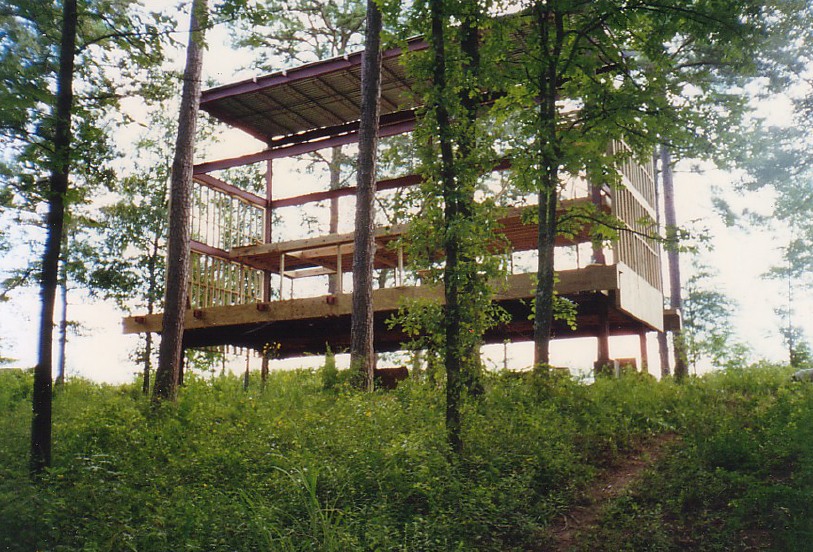

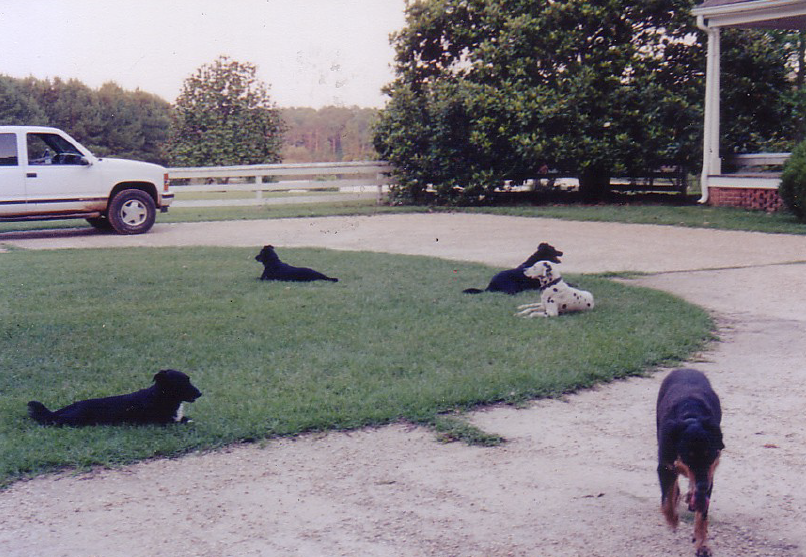
, an intimate alive experience, embedded with practice, in the summer of 97 i remember listening to blut aus nord and summoning for the first time on a discman in my bunk bed in the old farm workers shack, walking in the forest with the dogs

, canoeing across the lake with the dogs swimming, only their heads visible, 5 of them, yelping with their mouths half underwater, ending up in the hospital multiple times, for myself and with others, the Chinese buffet in town in Perry, all of that was architecture to me), it was a small firm, the 2 principals and me (later that summer they hired a guy (email address i shit you not, on his fucking resume, was arcboy69@yahoo.com (feel free to drop him a line)) who came to the interview in a warehouse in santa monica wearing a 3 piece suit) in a little corner of a built out warehouse in Santa Monica near my beloved 18th coffeehouse (http://www.cafetableaux.com/18th-street-coffeehouse/) and by god were these two guys pricks, they were rude, unhappy, cynical, and very dogmatic, they did great work, but it was THEIR work and i was there to execute it precisely to their specifications, and although that is much more frequently the nature of architectural practice, it was not for me, i was nauseous at work every day (not to mention getting my black heart broken by Immortal releasing AT THE HEART OF WINTER), the following summer i spent back in Georgia on the farm and going to hellfest in Syracuse to see Starkweather, but i had kinda chosen a path there, whether i knew it or not, that i wanted to crack architecture open, and returning to LA that August i started my masters thesis which was focused on creating a new representational language for architectural representation that was primarily focused on the openness of text rather than the prescriptiveness of orthographic drawing, my first in a series of experimental exercises (in the scientific sense) was taking the text instructions from Robert Morris's BLIND TIME drawings and creating my own versions
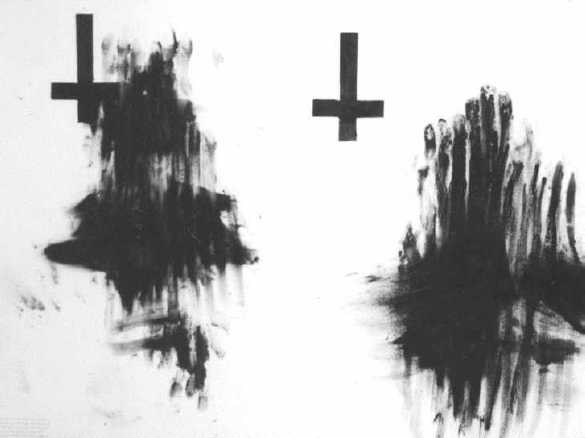
, so basically plagiarism with a purpose, this was just to get my feet wet, secondly i took an essay by Peter eisenman about his Canneregio project in Venice and drew/built my own version by productively rereading his descriptions

, then, my final preparatory exercise was going from a finished piece of arch, not a text about arch, and creating an as-built document for the work, that could then have been utilized to create "infinite" variations on that seed, this was done for a motel room ar Arne's Royal Hawaiian (RIP)

in Baker, CA, i made 2 drawings, one was called an etymological furniture schedule and the other was a subjective spatial recipe (or something), this was an attempt at creating a language for communicating with other designers and fabricators in an open and subjective and productive manner

, finally, i used this language of representation or documentation to communicate with other thesis students to "design" elements of an installation based on baudelaire's "the double room", where one side of a wall in an old warehouse was the "sober" side

and the other was the "stoned" side

, anyway, this produced an outcome that fit some loose set of qualitative characteristics but was heterogenous in voice, not to belabor this, but i proceeded on with these thoughts in an architectural collaboration with a friend of mine under the guise of a small practice called the work.group for maybe 15 years after school, we engaged in what i would call obstructive collaboration, people might call aspects of it "photoshop tennis" in which we would share files of various sorts back and forth with the expectation of unearthing possibilities unexpected by each of us
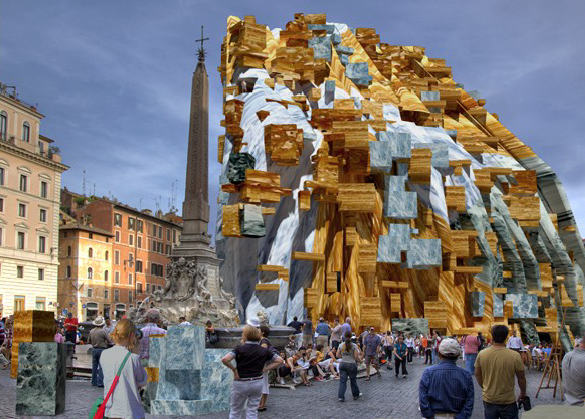
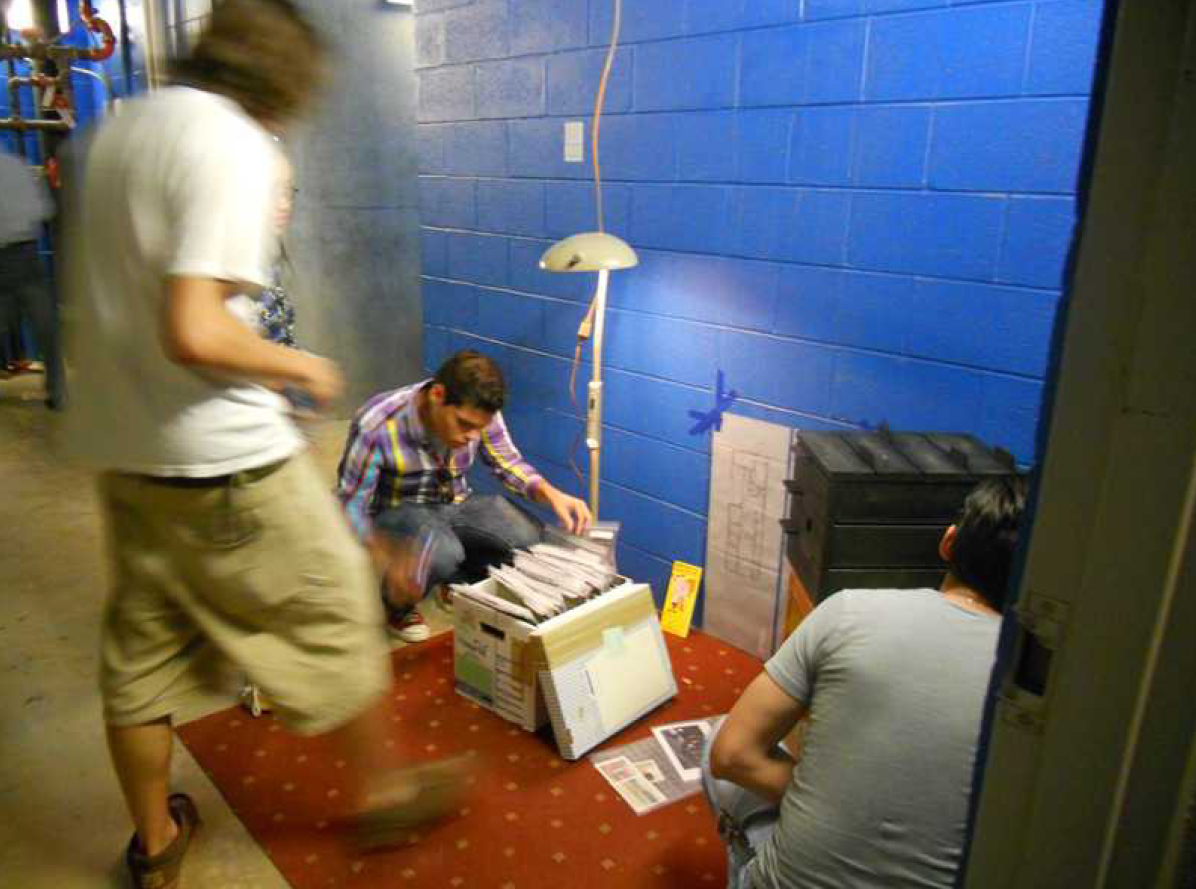

, this is all pretty in keeping with my expectations of literature in general when one includes the reader into the equation, and without getting into the weeds with barthes and eco and such, all of my own writing has been with the goal of a reader being able to make their own work from mine, although i am very egotistical about what i am doing, my underlying agenda is quite the opposite, MASSIVE being the extreme example of this... 


thus we have a natural transition point to talking about ItC and collaborative processes.......




Friday, November 18, 2022

incastellated aesthetics

Total fucking necro, the faxed artwork of TRANSILVANIAN HUNGER, cold meat industry sigil bs, the BEGOTTENing of 90s dtv horror trash stills, everything on all the filters redlined, 90s websites like Dans Gallery of the Grotesque and blackmetal.com, Hellhammer, all come to mind for an underlying incastellated spirit, but we've made a conscious effort for our aesthetics to be distinct from our products, as elegant as something like Fitzcarraldo eds is it tips its hand about a perception of literature that is about acquisition and status, it is the suggestion (at first blush quite admirable) that all that matters is the text, sounds like something we'd love, but the more you think about it the less it is invested in the potential of the book as a thing and by extention the potential inhabitability of the text, it's suggestion is that the text could have been in any typeface, could have any cover, be any aspect ratio and only happens to have that particular blue cover, aspect ratio and set in Fitzcarraldo because they are the pub who acquired it, i guess you could say that all of our books look the way we do because we published them, however they never know what they will look like until we do, can you imagine BELFIE HELL with a tasteful blue cover, PERIPATET, HUNCHBACK 88? But one can easily imagine NOCILLA LAB with 1000 other covers, it is not the point though i don't think as to why all of our books avoid our "brand", is more that brand isn't or shouldn't be paratext, there are so many aspects of a book that can thicken its existence, i feel like there is probably a conception that with great literature you could read it off a phone and it would still be great, that you could listen to it on a podcast and it would still be great, but truly, if you're taking advantage of language (what other priority shutoff literature have) I don't think that is possible, Strickland (still not gonna spell his name) tweeted that he was listening to a FINNEGANS WAKE audio book while going to sleep, I think that's rad, but an audio book of the most linguistically complex prose ever written is missing the visual component of its punmanship, only seeing the text (and if you know like 50 languages) and its intentional misspellings etc is giving the full breadth of its possibility, it is a text meant to be read, why would all texts not aspire to be read, otherwise just record a podcast, so take FINNEGANS WAKE as the extreme of linguistic expectation for this, then there are other aspects of print to be explored and exploited, typesetting, i think of THE F TEXT for instance where each letter in the whole book was individually set to address Douglas's process of photoshop layer archeology, or PERIPATET where for whatever reason each page had a different font size so that despite different lengths of text components they still filled an entire spread, typeface, i think of NYMPHOLEPSY where we selected a font with as many ligatures as possible to express the interconnected nature of a highly sexual text written by two people, or BOUND, where we created a typeface based on Eximperituserqethhzebibšiptugakkathšulweliarzaxułum's logo to "write" a map of Dantes inferno, or aspect ratio where SEA-WITCH was already designed as a square, or the forthcoming AUTOBIOLOGY which uses a wider aspect ratio and a very narrow text block to accentuate the sense of scrolling through a long uninterrupted text... none of this is to even touch on cover art (we have multiple books that don't even have the title on the cover), title sequence (some books don't "start" for dozens of pages), etc, these things require the utmost freedom to truly bring a books potential to life as a book and not just something that has been written, and thus, as much as we strive to indulge in "our" aesthetic, our books will forever each have their very own, from scratch, bespoke, total fucking whatever identity. 

Take Banffy for cloacas, a womp

Woooooah! Andrew Koenig found dead. Listen to me! He was a vegan warrior. I want to go to Culvers to eat fried mermaid from thei...